Why Low Lead Content is Important in Bathtubs and Shower Faucets
When buyers evaluate wall-mounted bathtubs and shower faucets, appearance is only one part of the decision-making process. For many projects, especially residential renovations and small commercial projects, low lead content is a crucial factor to consider because these faucets are directly in the water flow path. This involves more than just the label on the packaging; it's about compliance, customer trust, and long-term specification certifications.
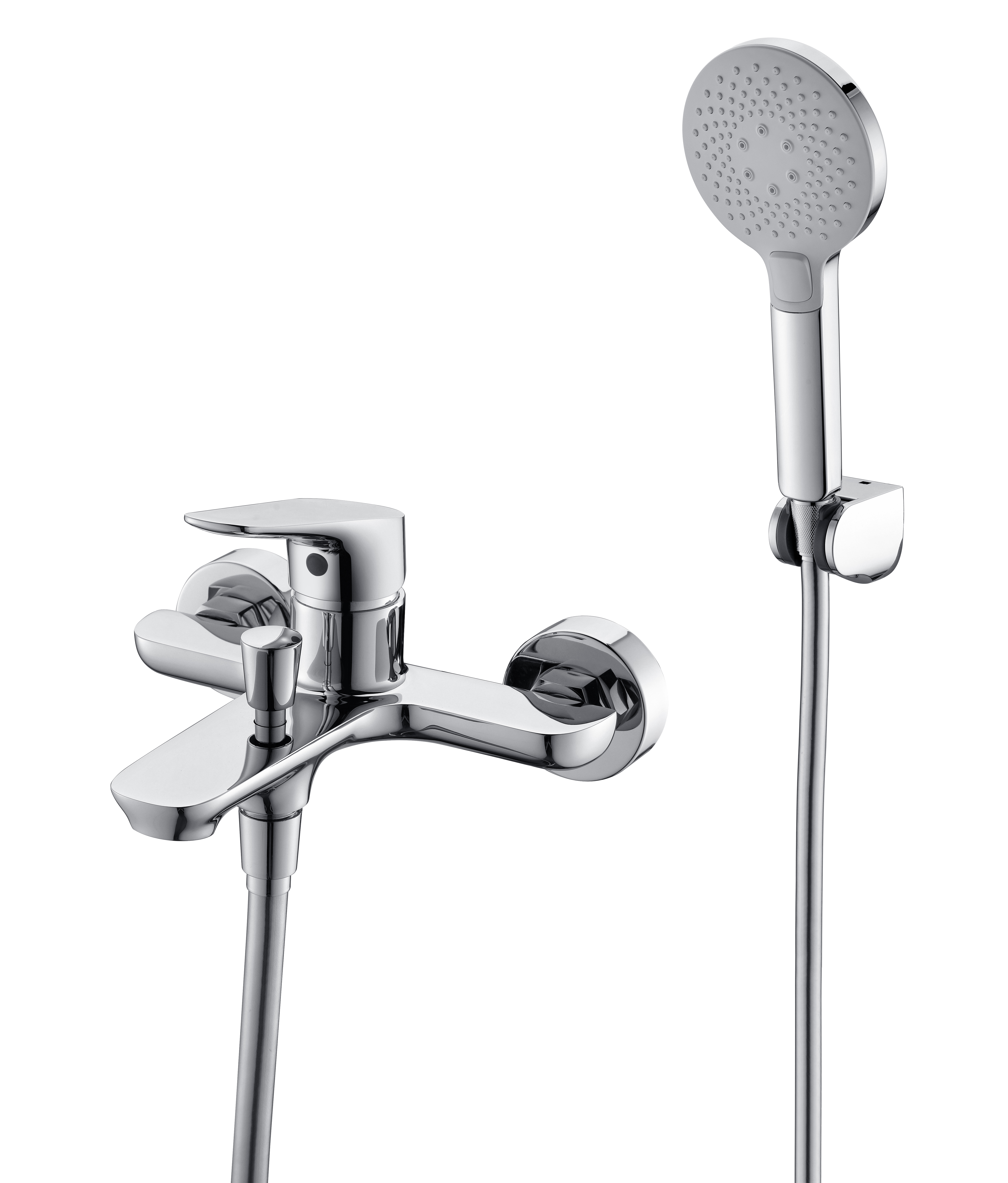
The bathtub/shower mix faucet described here is a compact wall-mounted set that includes a single-handle faucet body, a bathtub spout, a diverter, a hose, a hand shower, and a shower holder. On the surface, it seems like a very simple product. However, in practice, the procurement team must weigh aesthetics, ease of installation, material expectations, and the chemistry of the water-contacting components. Making incorrect assumptions early on can stall the project later when the specifications team demands documentation that wasn't previously collected.
This article aims to help engineers, purchasing managers, and product teams decide what to check before approving a mixer kit for a bathroom project, and how to ask the right questions when low lead content is part of the requirements.
What is this mixer kit? And what are the risks involved?
This product is a wall-mounted bathtub/shower combo faucet set. It combines bathtub filling and showering functions into one. Visually, it features a compact design with a lever handle, an arc-shaped spout for bathtub filling, and a diverter to switch the water flow to a handheld showerhead. The handheld showerhead has a multi-nozzle design, and the set includes a hose and bracket for convenient everyday bathroom use.
From a buyer's perspective, the key point is that not all external surfaces reflect the materials actually in contact with water. Polished chrome or imitation chrome surfaces may obscure the various substrates beneath. The substrate, filter design, internal seals, and even small connecting parts can all affect whether the component meets low-lead requirements. If lead levels need to be controlled for drinking water contact, these internal details are more important than shiny surfaces.
Therefore, buyers should use product images as a reference, not as evidence. Images can help confirm configuration and installation methods, but cannot verify alloy composition, certifications, or lead content in parts that actually come into contact with water.
Buyer's Notice
If you're evaluating a wall-mounted bathtub/shower faucet with a handheld showerhead, the main concern is usually practicality, not aesthetics.
Is this product suitable for drinking water contact environments in your market? Can the supplier provide documentation proving low lead content in water-contact components? Do the materials used in the components and internal parts meet your project specifications? Are the installation dimensions and wall connection layout compatible with existing bathroom space on site?
These issues may seem basic, but they often determine the success or failure of the approval process, preventing the need for redesign later. Even if a product appears to meet the requirements, it may fail to pass the procurement review due to incomplete documentation.
What needs to be verified before specifying a low lead content?
1. Materials that come into contact with liquids, not just visible surface coatings.
First, it's important to identify which components will come into direct contact with water. For this type of faucet, this typically includes the main body channel, the outlet channel, the distributor channel, the hose connection, and the internal valve core interface. Surface finish alone doesn't tell you much. Chrome plating is common, but the base material can vary, and buyers shouldn't assume it's a specific alloy without written confirmation.
If a supplier claims a product with low lead content, ask which components that claim applies to. A discerning supplier will differentiate between the body, trim, handset, and any internal accessories or connectors. This distinction isn't bureaucratic nitpicking, but rather to avoid misunderstandings within the team later.
2. Documentation and Market Requirements
Requirements for low lead content declarations vary across different markets. Some markets require formal certification or compliance with specific pipeline standards, while others rely on test reports or declarations. Since specific standards are not provided here, the safest approach is to request relevant documentation that meets the target market's requirements before placing a purchase order.
For purchasing managers, the best practice is simple: request documents as early as possible. Don't wait until the product is shipped or in storage to request them. It's far easier to resolve missing documentation during the sample stage than after the project schedule has been adjusted.
3. Installation format and compatibility
This product is wall-mounted and is a common choice for bathtub/shower enclosure installations. Therefore, the amount of space and wall clearance is crucial. Even if the finish and handle style meet requirements, the installation must be aligned with the plumbing layout and the intended mounting points. Buyers should confirm whether the kit is for a bathtub, shower enclosure, or bathtub/shower combo only, and confirm that the included bracket and hose lengths match the available space.
One point to note is that many bathroom problems are not caused by the faucet itself, but by a mismatch between the faucet and the wall. Even if the product is technically sound, it may not suit the overall style of the room.
How can the product configuration support daily use?
This mixer tap is designed for simplicity and ease of use. A lever adjusts the water temperature and flow, the bathtub spout fills the tub, and the diverter directs the water flow to the handheld showerhead. This configuration is common in homes, hotels, and renovation projects because it eliminates the need for an additional shower system, providing both bathtub filling and flexible spraying options.
The handheld spray head with multiple nozzles is a practical little detail, making rinsing and cleaning much easier. The hose extends the range of use, while the stand allows the handheld spray head to be stored away when the user only needs to fill it with water, preventing it from obstructing operation. From the end-user's perspective, this is a compact and easy-to-understand product. While this simplicity is beneficial from a specifications standpoint, it shouldn't overshadow the careful consideration given to the materials used.
More important selection criteria than appearance
When comparing similar bathtub/shower faucet sets, buyers typically prioritize based on the following specific factors:
First is the reliability of the materials. Second is the durability of the surface treatment. Third is installation compatibility. Fourth is ease of maintenance. Fifth is the user experience of the handheld showerhead. These aspects are usually more important than the decorative design.
For low-lead applications, material reliability is paramount. Suppliers who can clearly explain the structure of contact components are generally better suited as long-term partners than those who only emphasize a "high-gloss" or "modern look." This may sound obvious, but it's easy to be misled by the visual appeal of a showroom.
The durability of the finish is crucial because bathroom fixtures are often in a damp and high-traffic environment. Polished chrome and faux chrome finishes are popular, partly because they are easy to match with other bathroom hardware. Nevertheless, buyers should still inquire about the finish's durability under daily cleaning and repeated contact. Nobody wants a faucet that looks gleaming in the showroom but has faded after six months.
Common mistakes when choosing low-lead bathroom faucets
A common mistake is assuming that products labeled "metal" are suitable for low-lead content projects. This is not the case. Another mistake is making judgments based solely on drawings or photographs without requesting material declarations for parts that come into contact with water.
The second mistake was ignoring the splitter and hose connections. These small parts are easily overlooked during the audit process, but they are part of the components and can be crucial in compliance discussions.
The third mistake is approving products based solely on their appearance. Products from different suppliers may have identical visible chrome plating, but their internal structures can vary greatly. This is especially common for products where the brand, alloy, and valve core type are not explicitly disclosed.
Finally, some teams only discuss documentation issues after the prototype is complete. This often slows down the project. If low-thread content is necessary, it should be considered a procurement issue from the outset.
Practical procurement advice for engineering and procurement teams
If you are preparing a request for quotation or product comparison, please use specific and clear language. Inquire about fixture configurations, included accessories, surface treatment specifications, material declarations for contact media, and available compliance documentation for the target market. Do not fill in the form yourself if the supplier cannot confirm the exact substrate.
For internal reviews, it's helpful to separate two often-conflated topics: appearance and compliance. For example, a bathroom faucet may look beautiful, have a compact design, and be fully functional, but it still needs to be followed up with documentation regarding low lead content. Addressing these two aspects separately can make decision-making much clearer.
In addition, the end use must be considered. In residential renovations, homeowners may be most concerned with the feel of the handle and the convenience of a handheld showerhead. However, in hotel or multi-unit residential projects, maintenance teams may prioritize durability and ease of replacement. Procurement specifications should reflect these practical considerations.
Frequently Asked Questions
Does a chrome-plated surface mean the mixer has a low lead content?
No. Surface treatment and lead content are two different issues. A chrome-plated or imitation chrome-plated surface does not tell you what material the substrate or the part in contact with the liquid is made of.
Could you please confirm the exact material based on the product image?
No. The picture shows a wall-mounted blender with a metal casing, but its exact substrate cannot be determined from the picture alone.
What questions should I ask the supplier first?
First, carefully examine the details of the materials in contact with the pipes, relevant documentation regarding low lead content claims, and the installation compatibility of the rough layout. These three points can usually help identify real risks early on.
Does this set include a handheld showerhead?
Yes. The described product includes a handheld shower head, hose, and bracket, which are part of a wall-mounted bathtub/shower assembly.
The next step is the procurement team.
If you are considering installing a wall-mounted bathtub/shower faucet for a project with high lead content requirements, please consider the size selection as a dual factor for both design and compliance checks. Before placing an order, please confirm the materials that the faucet will contact the pipes, obtain relevant documentation, and ensure that the installation method matches the room.
Additional audits are more time-efficient and less effort-intensive than correcting discrepancies later. They also ensure that engineers, purchasing personnel, and installers have the same information, which is often crucial for the smooth progress of bathroom renovation projects.