Why the commercial faucet market keeps moving toward touchless hardware
A commercial faucet used to be a straightforward buying decision: pick a durable body, choose the right spout, and make sure maintenance teams could live with it. That logic still matters, but the market has shifted. In public and semi-public washrooms, the conversation is now shaped by hygiene expectations, water discipline, and how often a fixture gets abused in real use. That is why the sensor faucet has moved from a niche upgrade to a mainstream spec item in hotels, offices, airports, schools, and healthcare-adjacent facilities.
The headline change is not cosmetic. Touchless operation changes the interaction at the sink. Users do not need to grab a lever after touching doors, phones, or luggage. Facility managers, meanwhile, get a fixture type that can support cleaner restroom operations and, in some settings, reduce unnecessary water run time. It is not a cure-all, and it will not solve poor housekeeping or bad plumbing design, but it does address one of the most visible points of contact in a washroom.
What the current sensor faucet design is telling buyers
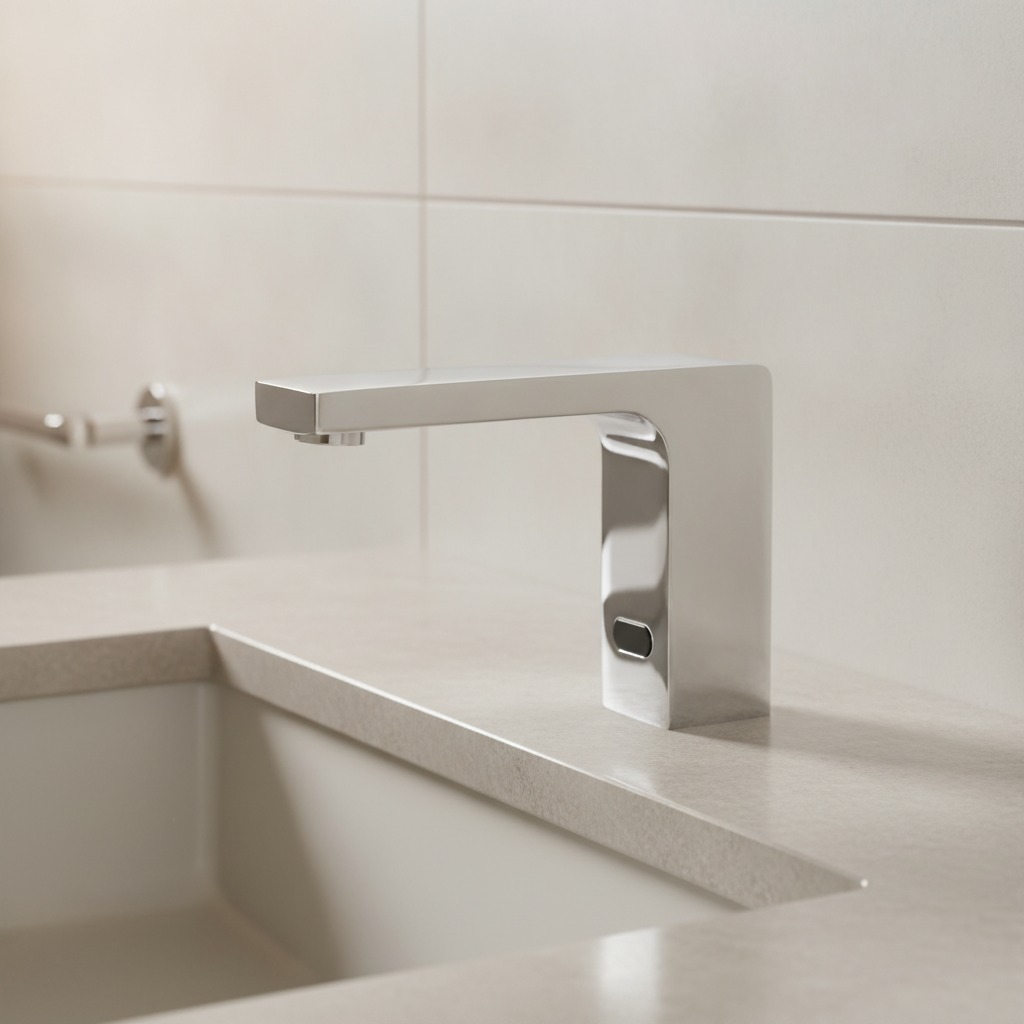
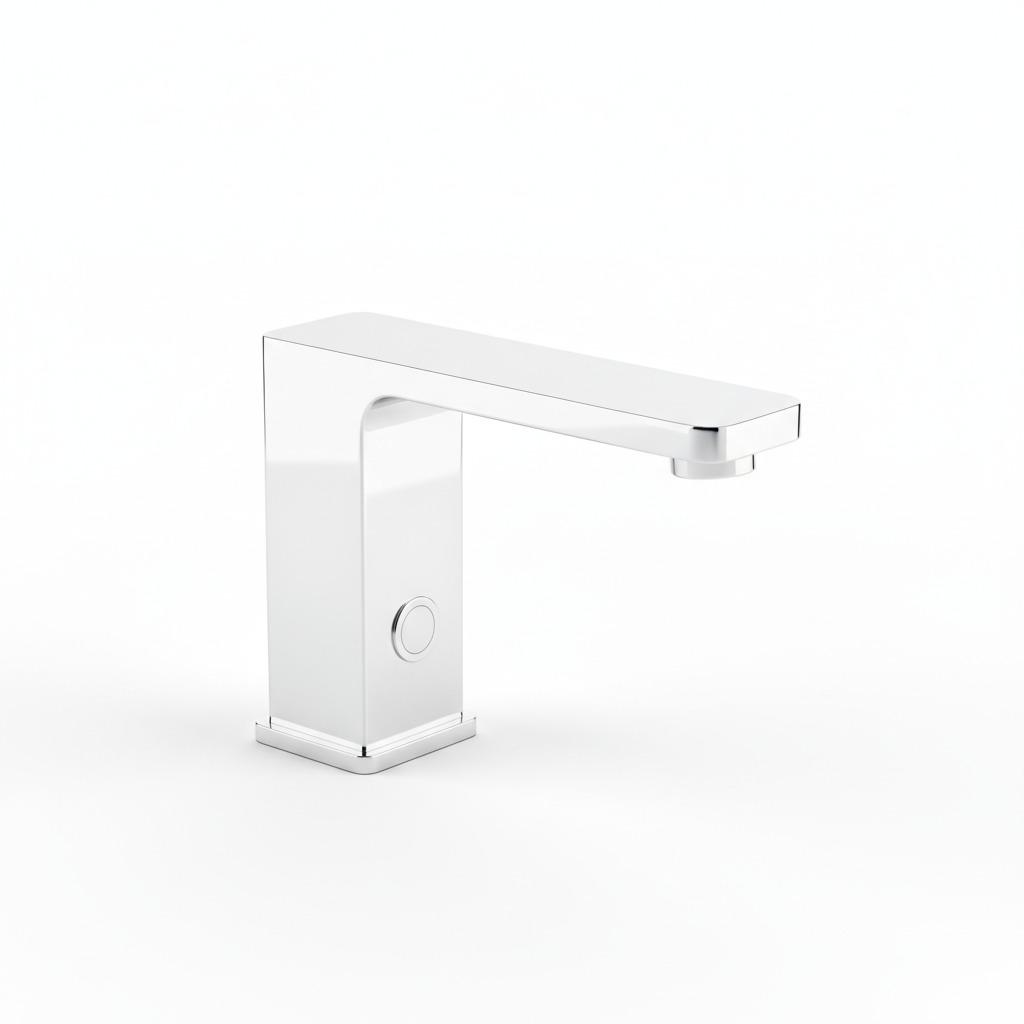
The product profile in this category is increasingly minimal and architectural. The style often appears as a single-piece block with a straight spout and a compact body, usually finished in polished chrome or a similar mirror-silver surface. That look is not just aesthetic. Fewer exposed seams and fewer manual parts can make cleaning simpler and keep the fixture visually in step with modern restroom design.
From a buyer’s perspective, that matters because commercial washrooms are rarely judged one fixture at a time. A faucet sits alongside basins, soap dispensers, dryers, tiles, and lighting. A heavy, angular body with a refined finish can read as a premium component, especially in front-of-house restrooms where the fixture is part of the brand experience. At the same time, the same design must survive frequent use and cleaning chemicals, so finish quality and corrosion resistance should be treated as practical concerns, not decorative ones.
Where touchless operation makes the most sense
The most obvious use cases are high-traffic and hygiene-sensitive spaces: hotel bathrooms, office restrooms, public toilets, handwashing stations, and similar sink installations. In these environments, the value of a touchless tap is easiest to justify because the fixture gets used repeatedly, by many people, with varying levels of care.
There is also a quieter operational advantage. When a sink area is designed for fast throughput, a sensor faucet can help reduce user friction. People wash hands, step away, and move on. That sounds simple, but in a busy restroom simple is often what holds up.
Quick comparison: what buyers usually weigh
For a commercial faucet decision, most sourcing teams end up comparing three things: durability, hygiene, and maintenance burden. If the product is touchless, a fourth factor enters the room immediately—reliability of the sensing system. A beautiful tap that misfires, delays, or turns on unexpectedly becomes a service ticket, not a feature.
That is why the visible compact body and embedded sensor window matter. They suggest an integrated electronic control approach, likely paired with an automatic valve assembly inside the faucet. The exact electronics, power source, sensing distance, and performance envelope should always be verified with the supplier. It is a small caution, but one worth repeating: do not assume all sensor faucets behave the same just because the exterior looks similar.
Selection criteria that deserve more attention than buyers sometimes give them
1. Installation fit
The image shows a sleek body and spout geometry, but mounting type is not clear from appearance alone. Before specifying a unit, confirm whether the basin, deck, or wall arrangement matches the faucet design. A mismatch here can create avoidable site delays.
2. Material and finish
Metal construction is usually preferred for commercial use, especially when paired with polished chrome or a mirror-like finish. That combination tends to hold up visually and can make routine cleaning easier. Still, buyers should ask how the surface will age under local water conditions and cleaning regimens.
3. Serviceability
Touchless systems introduce electronics into a place where plumbers have historically preferred simple mechanics. That does not make them a bad choice; it just means replacement parts, access, and maintenance intervals should be part of the decision, not an afterthought.
Common mistakes when sourcing a commercial faucet
The most common mistake is treating all sensor faucet models as if they are interchangeable. They are not. Some are designed for heavy public use, others for lighter commercial environments, and the differences may show up in sensor responsiveness, power management, or valve design.
Another frequent error is focusing only on the exterior finish. The polished body may look strong on a sample table, but the real test is whether the internal assembly remains stable after repeated cycles and routine cleaning. There is also a simple but important buyer warning: verify what is included and what is not. Do not assume temperature control, power accessories, or mounting hardware unless the supplier states it clearly.
Practical buyer advice for spec teams and distributors
If you are building a restroom package, start with the use environment. A hotel vanity, an office washroom, and a public toilet may all use the same broad product category, but their service expectations are different. For distributor catalogs, the more useful question is not “Is this a commercial faucet?” but “Which commercial setting does this faucet actually suit?”
For project teams, request full technical data before approval. Ask for the mounting method, control logic, power requirements, sensor behavior, and cleaning guidance. If the supplier can support those basics clearly, the buying process becomes much easier. If not, the apparent simplicity of the fixture may hide unnecessary installation risk.
What this product trend means in the near term
The movement toward touchless washroom hardware is likely to continue because it aligns with three pressures that do not go away: hygiene expectations, design standards, and facility efficiency. The commercial faucet is no longer just plumbing hardware. In many projects, it is part of a visible operational statement. A well-chosen sensor faucet can help a building look current, feel cleaner, and function with less friction.
If you are evaluating this category now, the next step is straightforward: compare the fixture’s visible design with the actual technical documentation, then check whether it suits your sink layout and service model. That is usually where the right decision becomes obvious.
FAQ
Is a sensor faucet always better than a manual faucet?
Not always. In low-use or highly customized settings, a manual faucet may still be simpler and easier to service. The choice depends on traffic, hygiene goals, and maintenance capacity.
Can the finish alone tell me if it is suitable for commercial use?
No. A polished chrome look is common in commercial hardware, but you still need to verify internal construction and the control system behind the finish.
Should buyers ask for samples?
Yes, especially for projects where restroom presentation matters. A sample can help you judge proportions, surface quality, and how the fixture sits with the basin and surrounding hardware.